
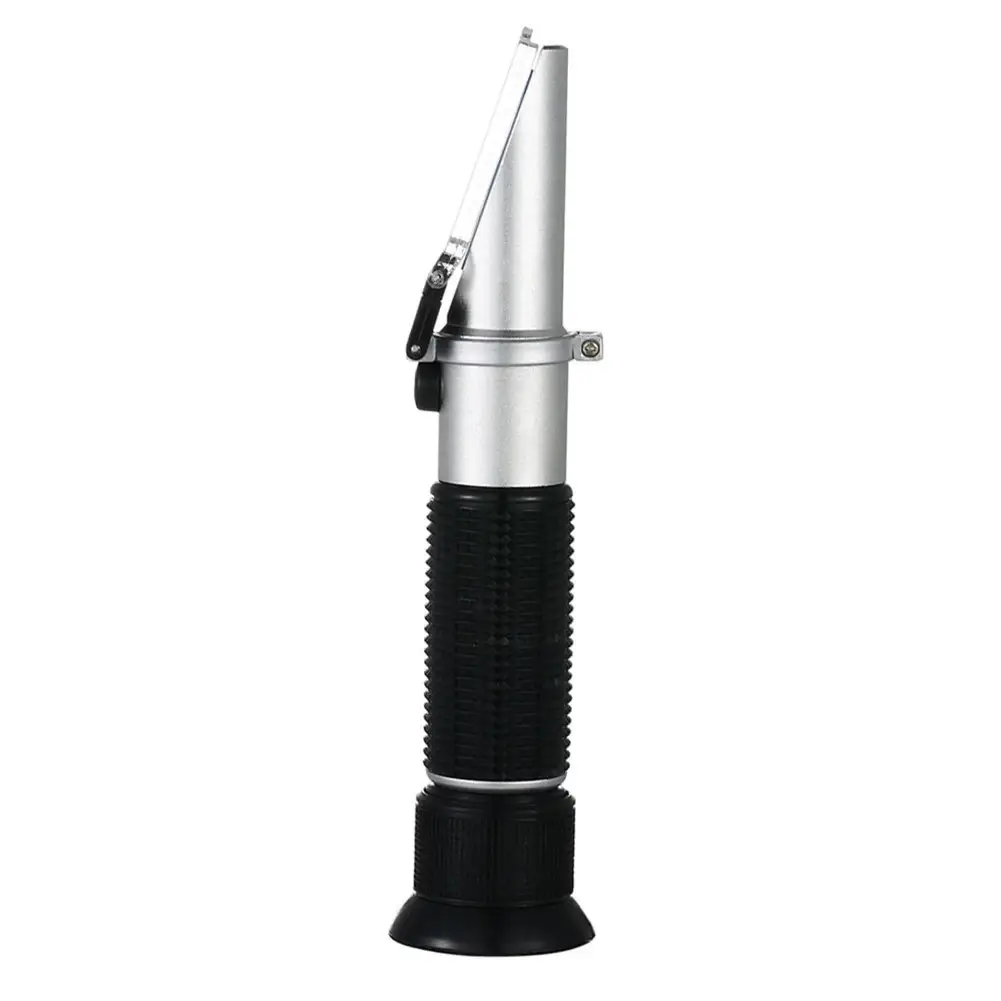
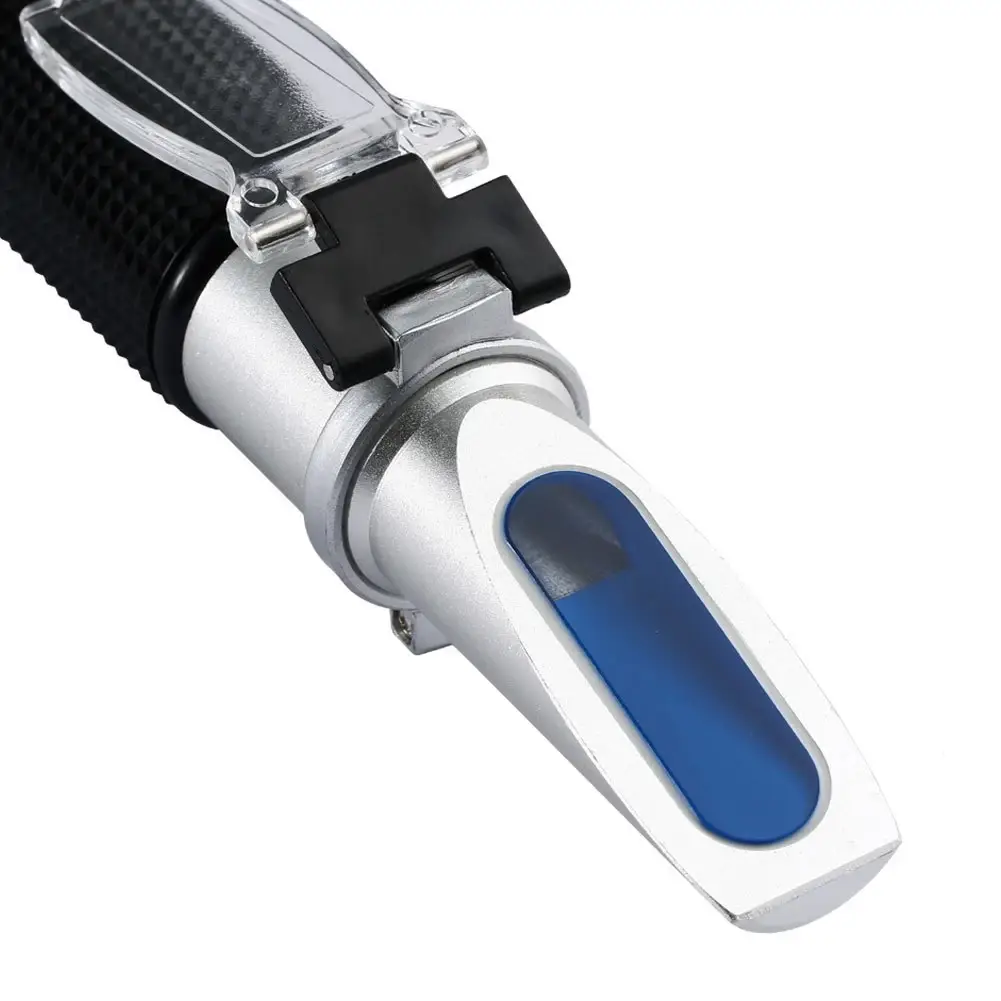

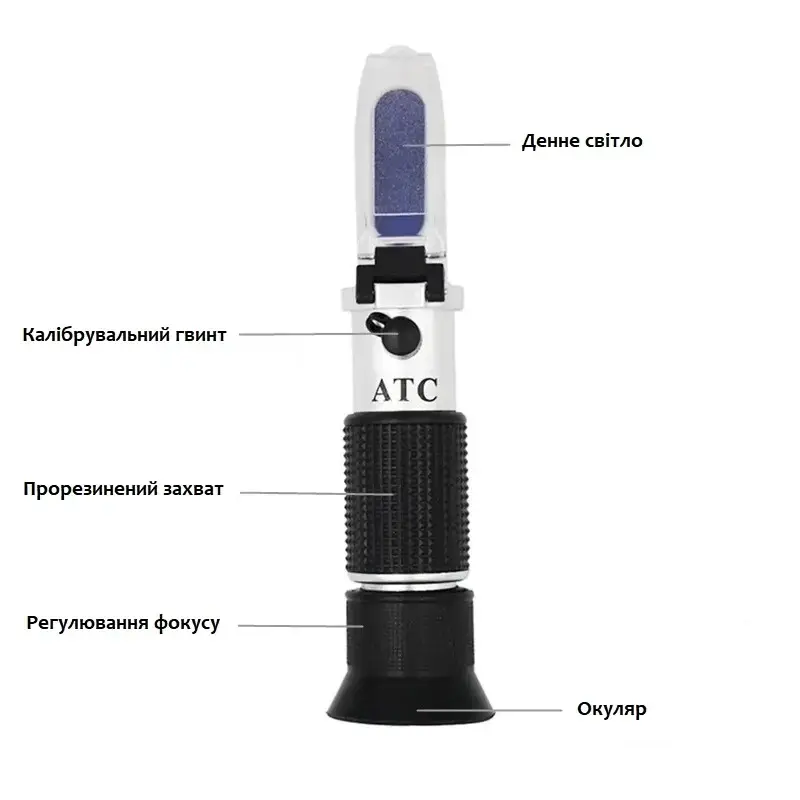

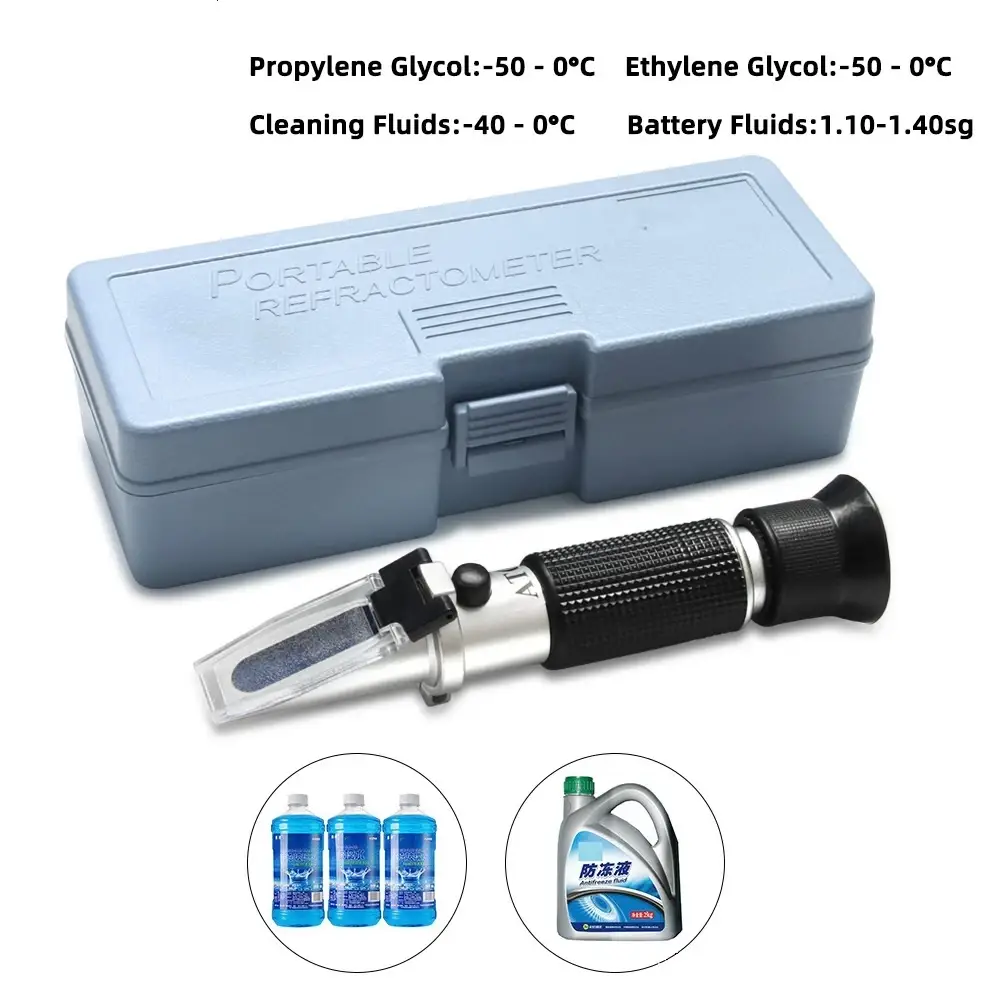

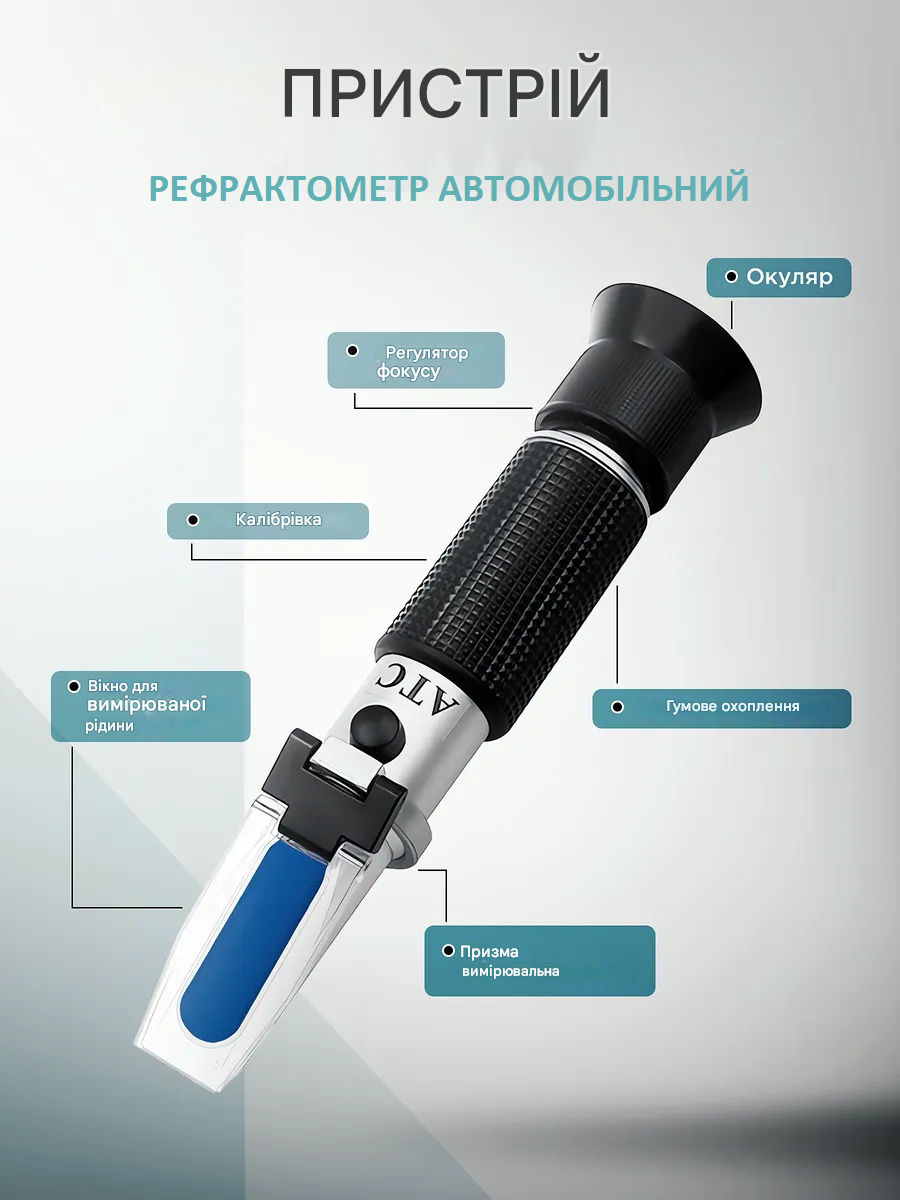
The Yellow Square RZ-115 / RHA-503ATC is a portable optical car refractometer with automatic temperature compensation (ATC). It reads the freezing point of G11/G12 and G13 antifreeze from 0 to -50 °C, washer fluid from 0 to -40 °C and battery electrolyte density from 1.10 to 1.40 kg/L. Two to three drops of fluid are enough for a reading.
Specifications
| Parameter | Value |
|---|---|
| Instrument type | Portable optical refractometer |
| Model | RZ-115 / RHA-503ATC |
| Automatic temperature compensation | Yes (ATC), at air temperatures from +10 to +30 °C |
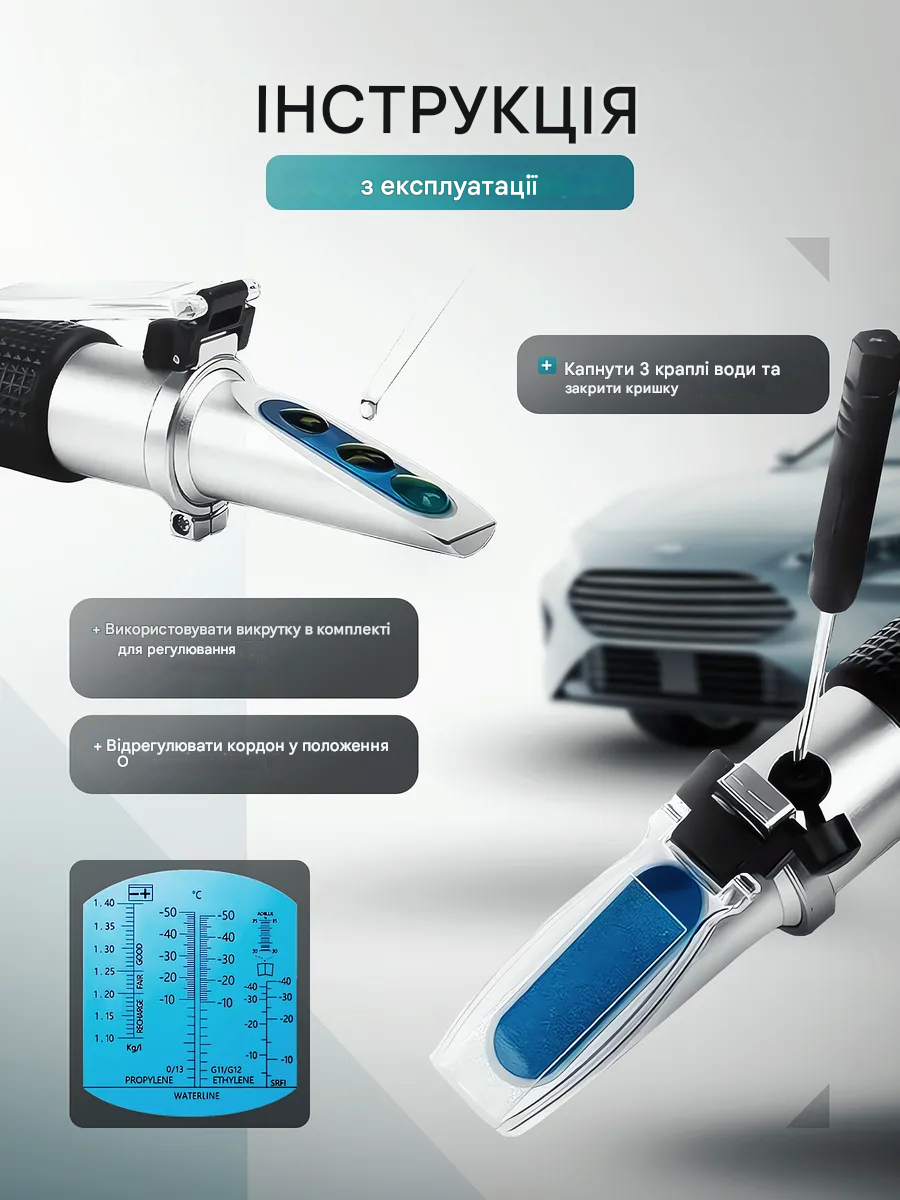
| Antifreeze G11/G12 (ethylene glycol) | 0 to -50 °C |
| Antifreeze G13 (propylene glycol) | 0 to -50 °C |
| Washer fluid | 0 to -40 °C |
| Electrolyte density | 1.10–1.40 kg/L |
| Scale division (temperature) | 5 °C |
| Scale division (density) | 0.01 kg/L |
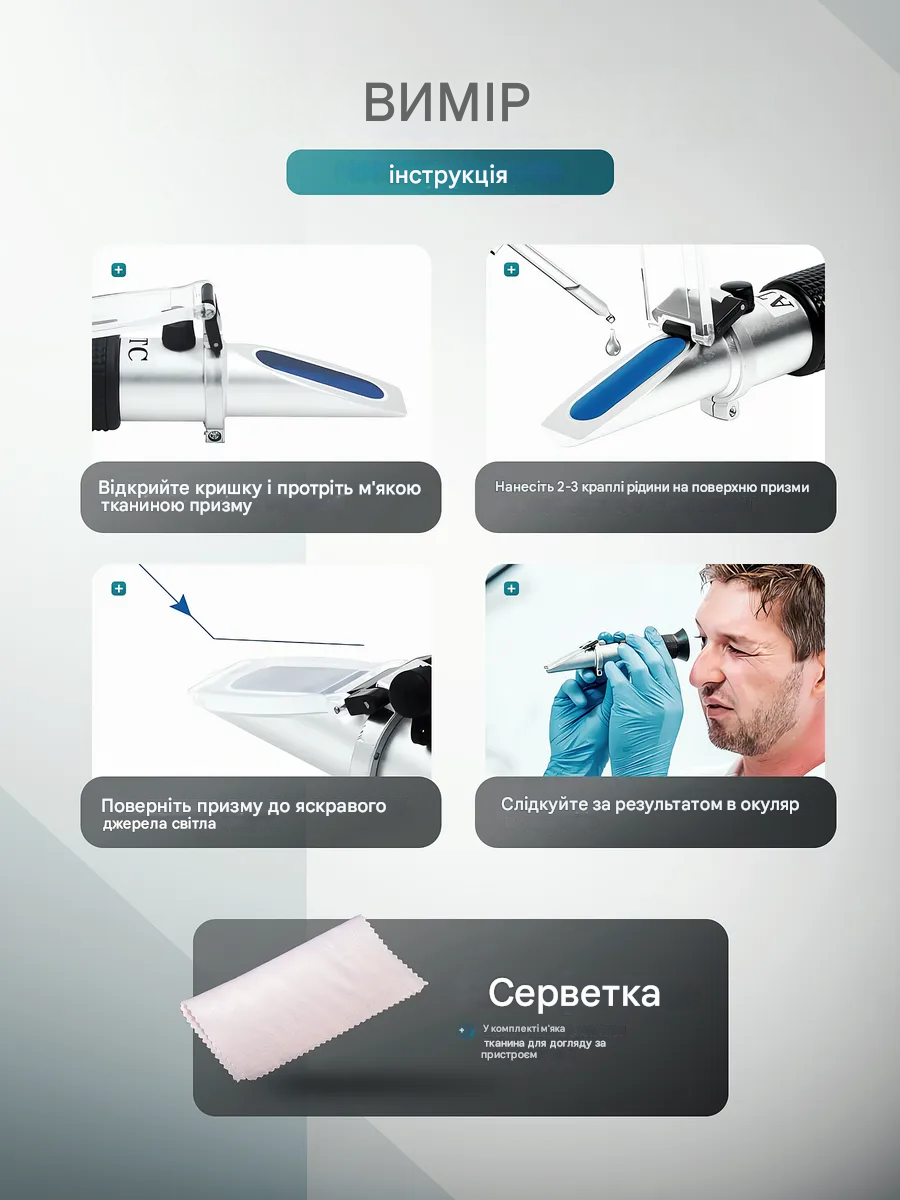
| Sample needed | 2–3 drops |
| Length | 170 mm |
| Colour | Black |
| Calibration | Distilled water to 0 °C (WATERLINE) with a calibration screwdriver |
| Condition | New |
What you get
- Three fluids, one instrument — antifreeze, washer fluid and battery electrolyte.
- No manual temperature correction — ATC works at air temperatures from +10 to +30 °C.
- Tiny sample — each reading takes 2–3 drops.
- Clear scale steps — 5 °C for antifreeze and washer fluid, 0.01 kg/L for electrolyte.
- Two antifreeze types — ethylene glycol G11/G12 and propylene glycol G13, down to -50 °C.
- Simple calibration — distilled water and the screwdriver from the set.
Who it is for
Car owners who prepare their vehicle for winter themselves and keep an eye on the battery, as well as garages, tyre shops and fleet services that check technical fluids every day.
Who it is not for
Anyone who wants a digital instrument with a display: this is an optical refractometer with a scale read through the eyepiece. It is also not for antifreeze with a freezing point below -50 °C, or for measuring in the cold outside the ATC range of +10 to +30 °C.
Use and compatibility
Checking the freezing point of antifreeze (ethylene glycol G11/G12, propylene glycol G13), measuring electrolyte density to judge battery charge and condition, checking the frost resistance of washer fluid, and general control of car technical fluids. The instrument measures by fluid type; no compatibility claims with specific fluid brands are made.
What is in the box
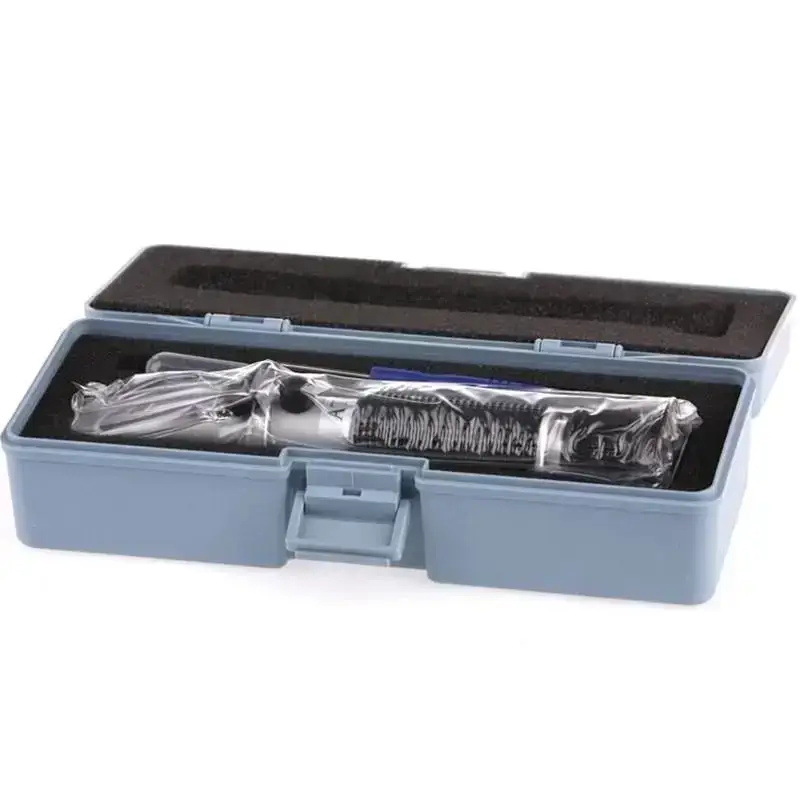
Optical refractometer, pipette for taking samples, calibration screwdriver, user manual, and a protective case or soft cloth depending on the kit.
Questions and answers
Can I check G13 antifreeze?
Yes, propylene glycol G13 antifreeze has its own scale from 0 to -50 °C, separate from the G11/G12 scale.
How do I calibrate the refractometer?
Put distilled water on the prism and use the calibration screwdriver to set the boundary line to the 0 °C mark (WATERLINE).
Do I need to account for the temperature in my garage?
If the air is between +10 and +30 °C, automatic compensation (ATC) handles it. Outside that range readings may be less accurate.
How much fluid does a reading take?
2–3 drops, taken with the pipette from the set.
How does electrolyte tell me about the battery?
The instrument shows electrolyte density from 1.10 to 1.40 kg/L in 0.01 kg/L steps; that value is used to judge battery charge and condition.
Reviews
There are no reviews yet.