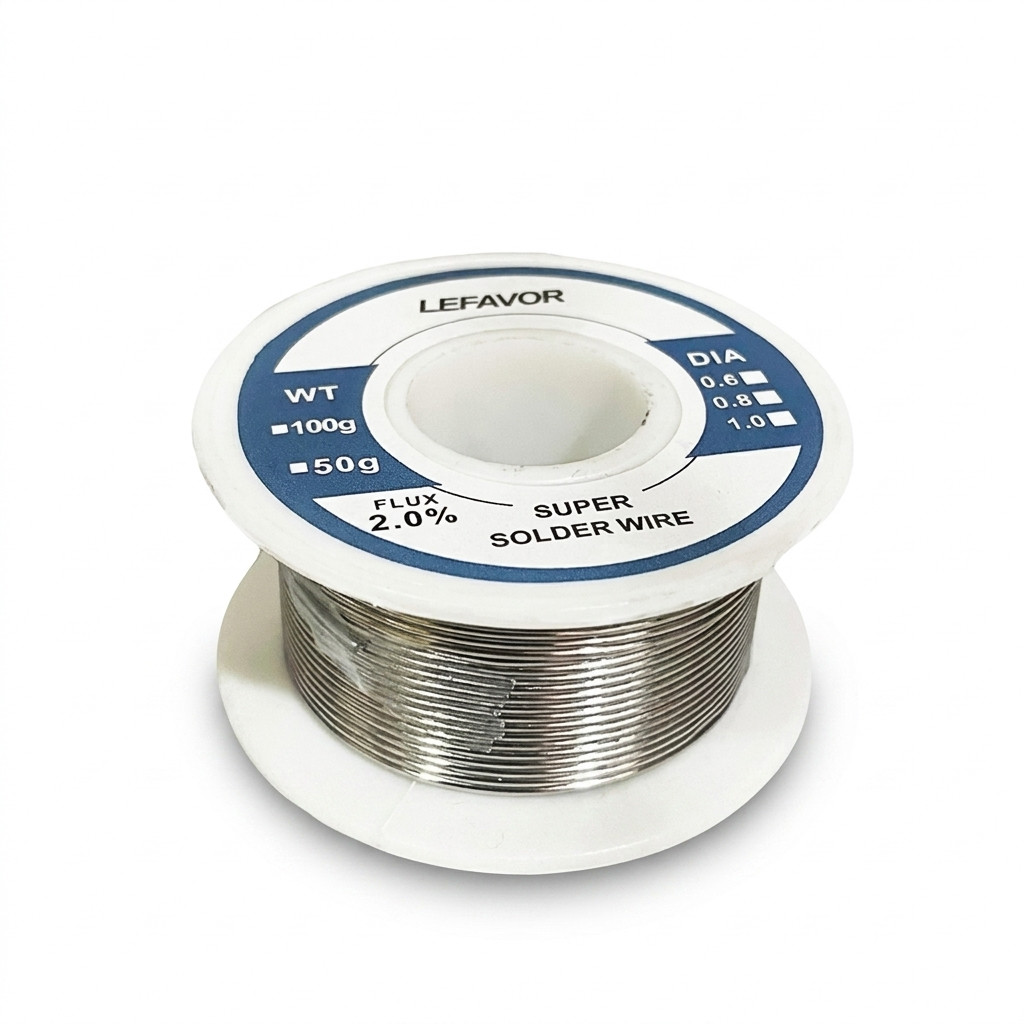
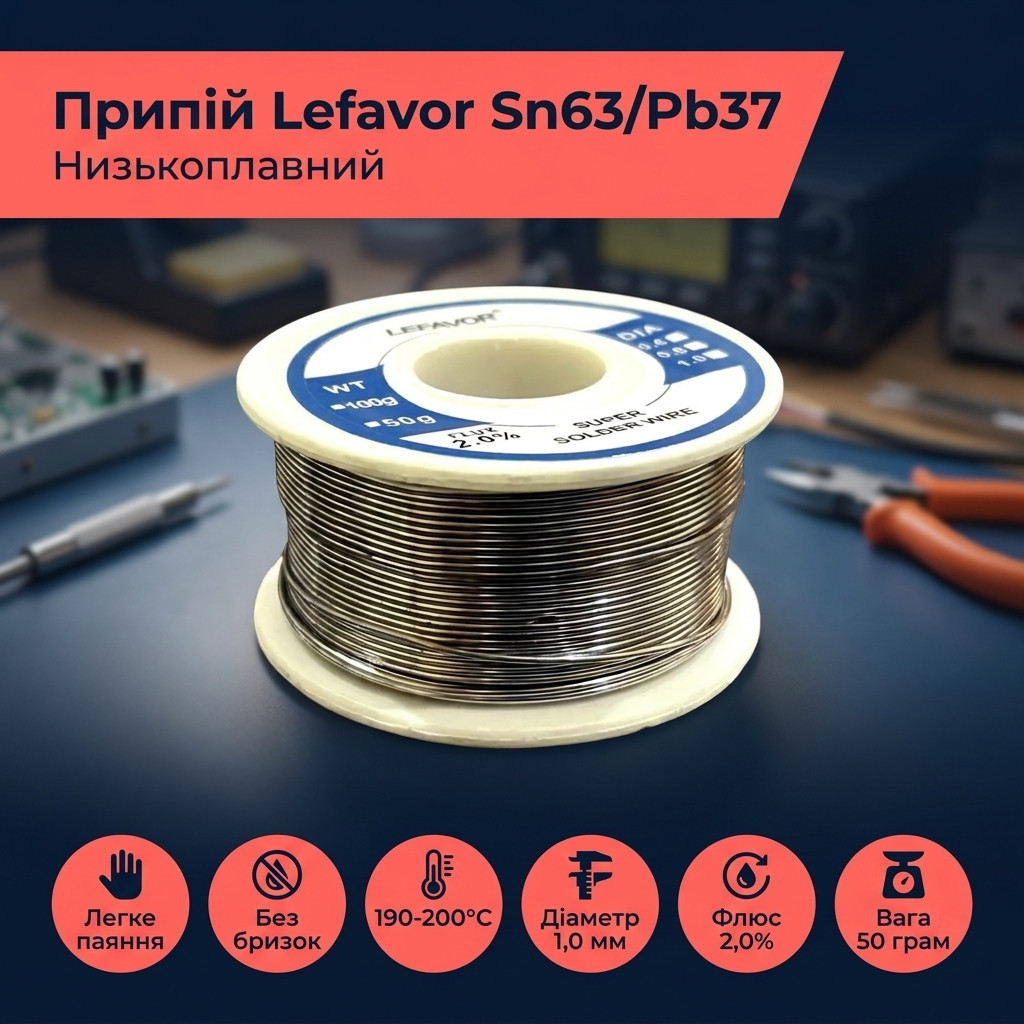


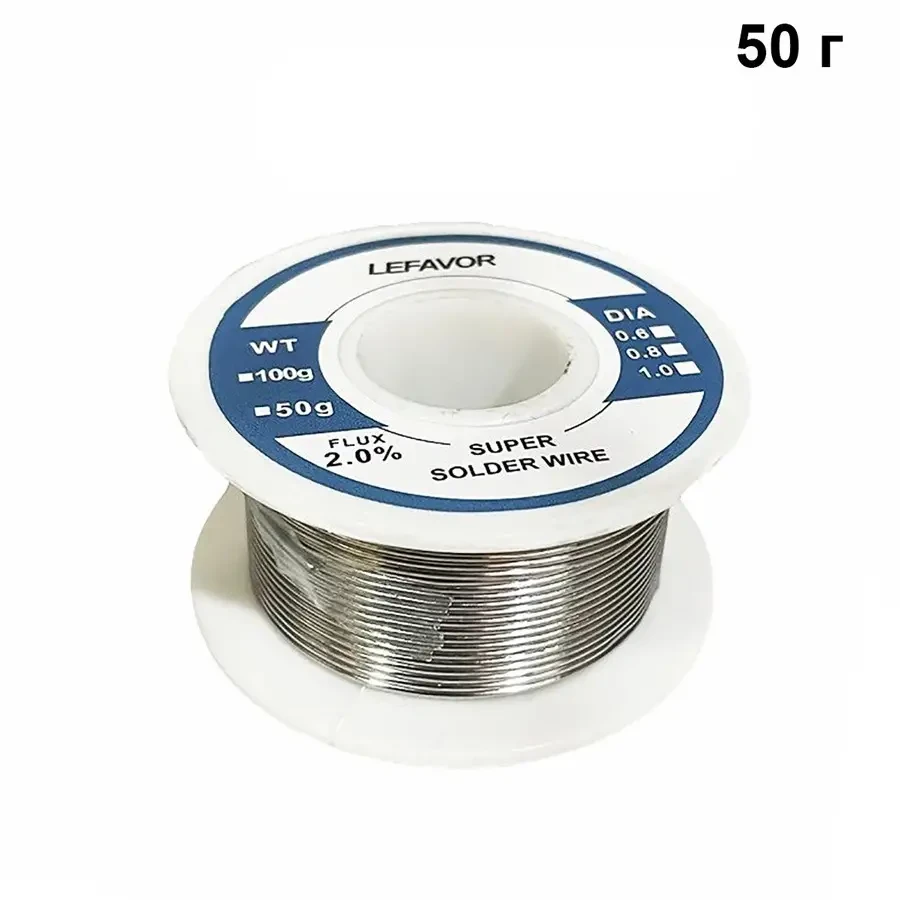
Lefavor Sn63/Pb37 is a low-melting tin-lead solder wire, 1 mm in diameter, in a 50 g coil with a 2% rosin flux core. The flux is no-clean and the alloy melts at 183 °C. It is intended for electronics repair, PCB and SMD soldering, ham radio and modelling work. Contains lead.
Specifications
| Parameter | Value |
|---|---|
| Brand | Lefavor |
| Alloy | Sn63/Pb37 (63% tin, 37% lead) |
| Wire diameter | 1 mm |
| Package weight | 50 g |
| Flux content | 2% |
| Flux type | Rosin, no-clean |
| Melting point | 183 °C |
| Melting class | Low-melting |
| Solder type | Tin-lead alloy |
| Flux purpose | Soldering |
| Supplied form | Coil |
What you get
- No extra flux for routine joints — 2% rosin flux is built into the wire.
- No board washing — the no-clean flux can stay on the board.
- Gentle heat — the alloy melts at 183 °C, so small parts are less likely to overheat.
- Easy dosing — 1 mm wire is simple to feed onto wires, leads and pads.
- Compact stock — a 50 g coil fits into any tool organiser.
- Known composition — 63% tin and 37% lead, marked Sn63/Pb37.
Who it is for
Phone, tablet and laptop repair technicians, radio amateurs, modellers and robotics hobbyists. Also for home repairs of household electronics when you want flux-cored wire that leaves nothing to wash off.
Who should look elsewhere
Anyone who needs lead-free solder: this alloy is 37% lead. It is also a poor pick for heavy parts that call for a high-melting alloy — it is a low-melting wire made for electronics.
Applications and compatibility
Repairing smartphones, tablets, laptops and household electronics; soldering printed circuit boards and mounting SMD components; building and modifying ham radio devices; precision work in robotics and modelling. The supplier does not list specific compatible equipment.
In the box
One coil of Lefavor Sn63/Pb37 solder, 1 mm diameter, 2% flux content.
Questions and answers
Do I need to clean the board after soldering?
No, the rosin flux in this solder is a no-clean type. You may remove residue if you like, but it is not required.
At what temperature does it melt?
The Sn63/Pb37 alloy melts at 183 °C. The supplier does not state an iron temperature, so set it to suit the size of the part.
Does this solder contain lead?
Yes, the alloy is 37% lead. Work in a ventilated space and wash your hands after soldering.
Is 1 mm wire usable on SMD parts?
SMD mounting is one of the listed uses. On small packages, feed the wire in short bursts to avoid solder bridges.


Reviews
There are no reviews yet.