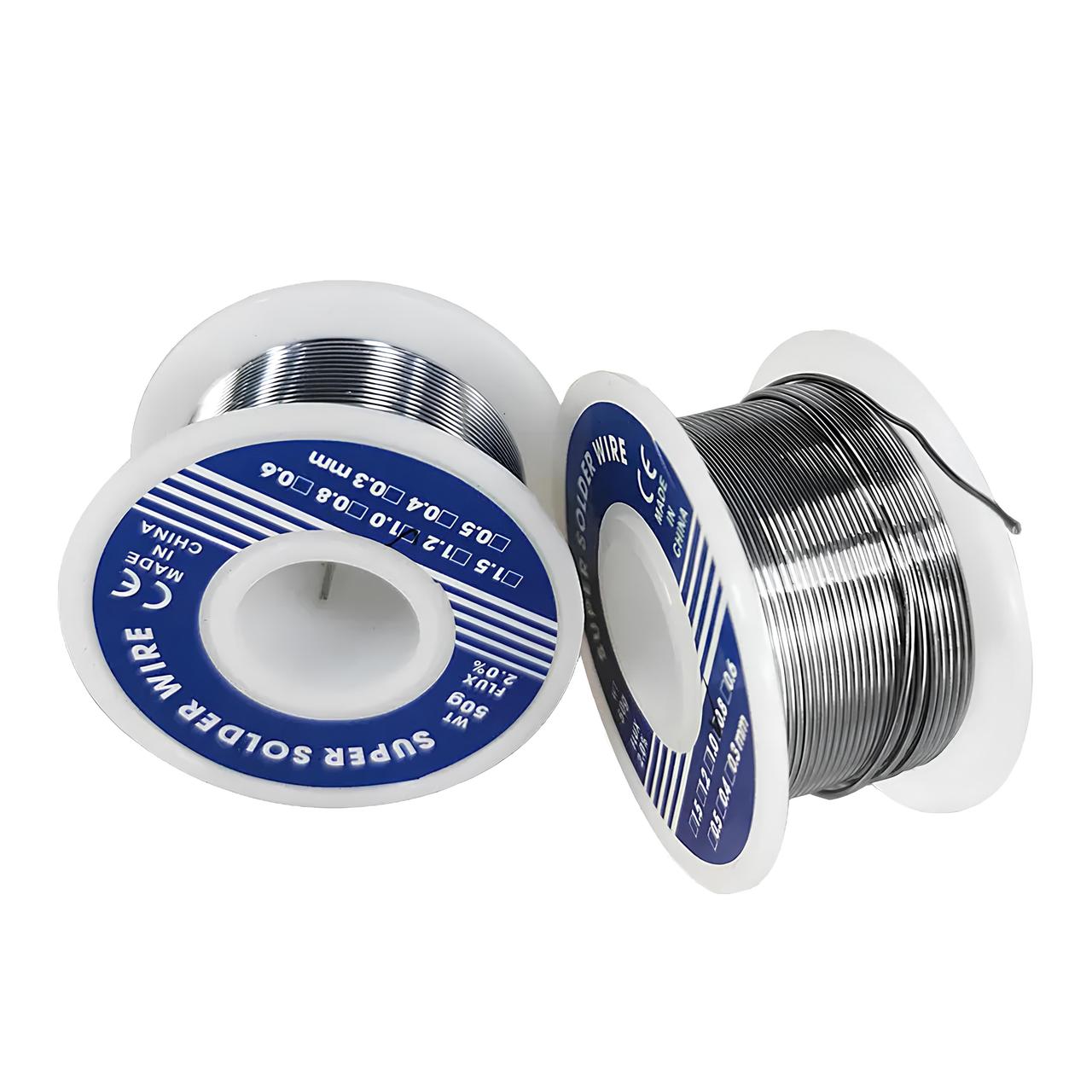

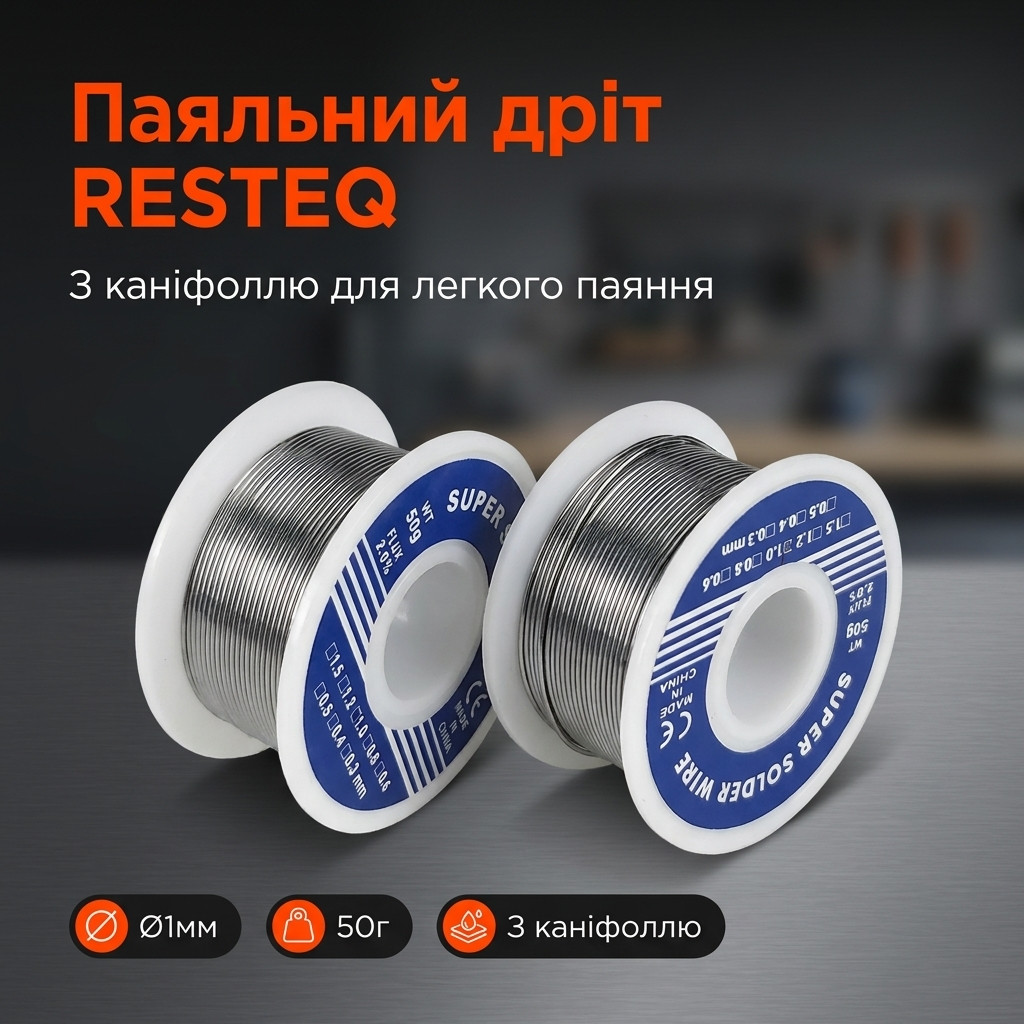
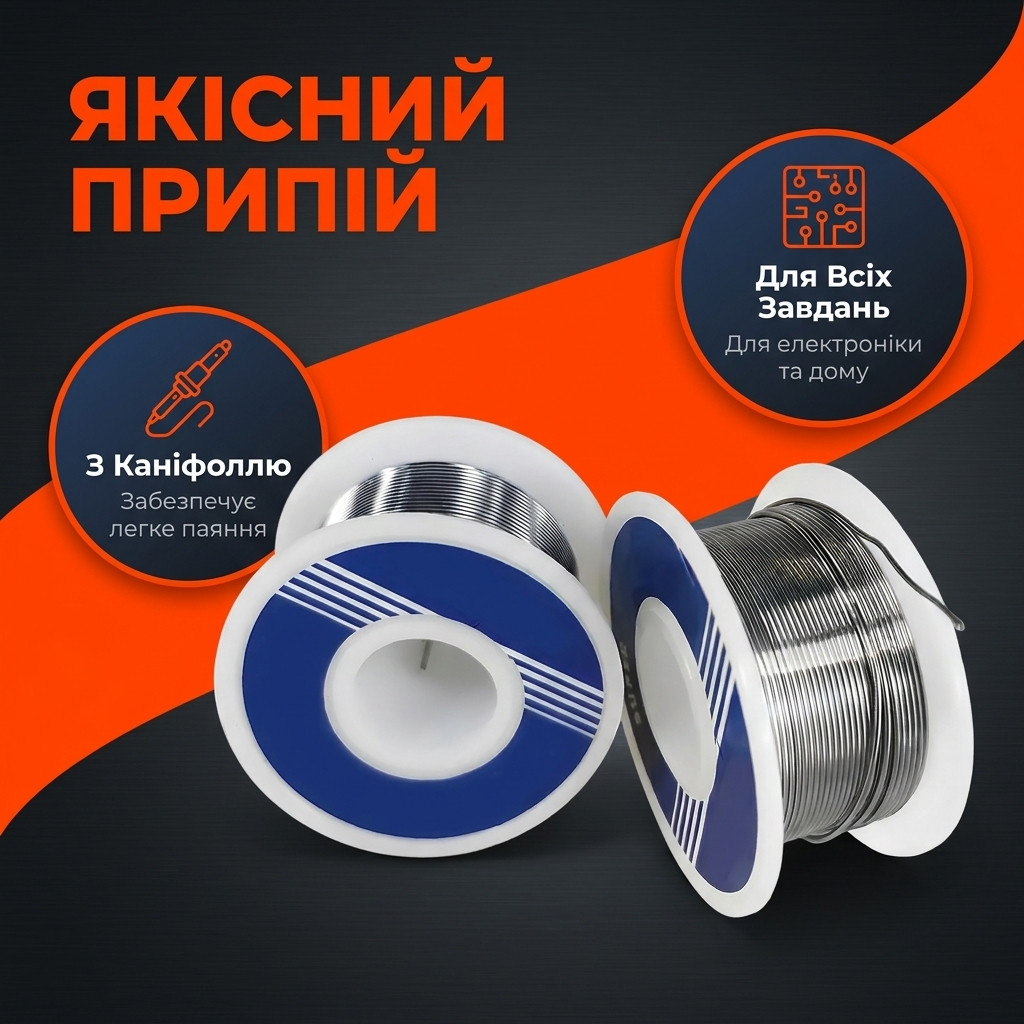
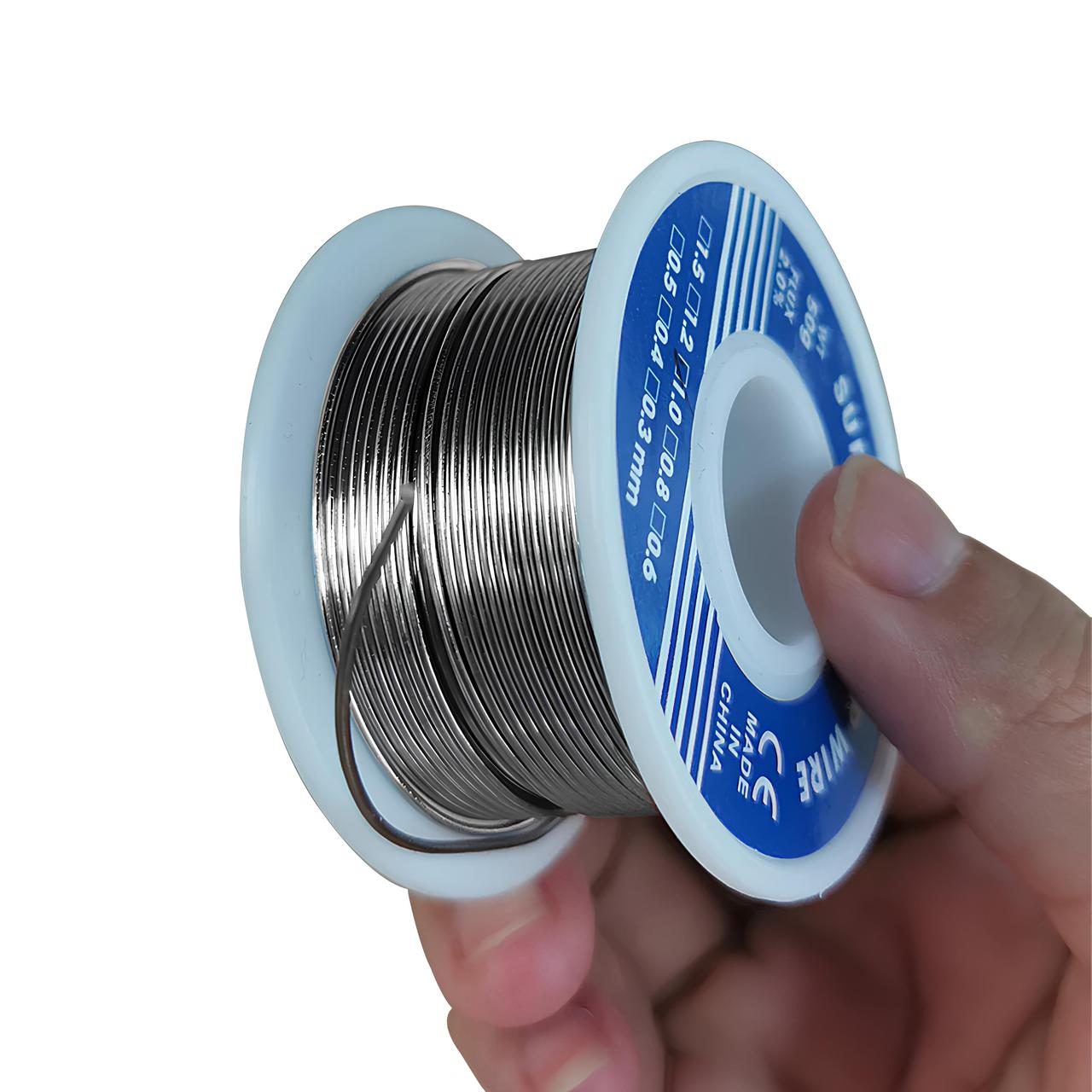
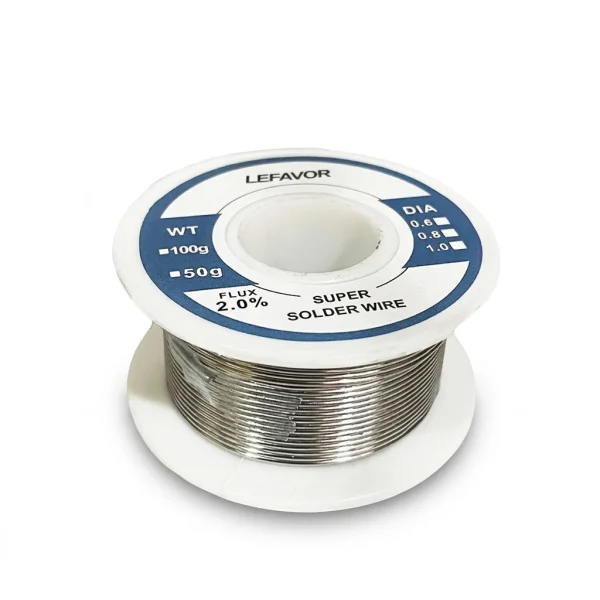
RESTEQ solder wire is a low-melting tin-lead solder, 1 mm in diameter, on a plastic spool weighing 50 g. The core holds about 2% rosin flux and the wire melts at roughly 183 °C. It is meant for smartphone and laptop repair, circuit board assembly, appliance wiring and DIY projects.
Specifications
| Parameter | Value |
|---|---|
| Brand | RESTEQ |
| Diameter | 1 mm |
| Weight | 50 g |
| Melting temperature | ~183 °C |
| Flux (rosin) content | ~2% |
| Flux activator | Rosin |
| Flux state | Solid |
| Flux activity range | Low-temperature |
| Flux solvent | Non-aqueous |
| Flux action | Chemical |
| Solder type | Tin-lead alloy |
| Melting class | Low-melting |
| Packaging | Plastic spool |
| Colour | Silver |
| Quantity | 1 pcs |
What you get
- Flux already in the wire — about 2% rosin in the core.
- Low-melting alloy — melts at roughly 183 °C, which is gentle on small parts.
- All-purpose diameter — 1 mm works for wires, contacts and through-hole parts.
- Chemically active flux — cleans the surface as it heats, so the joint wets better.
- Even winding — the plastic spool holds the turns and prevents kinks.
- Compact stock — 50 g of solder for a home workshop.
Who it is for
People repairing smartphones, tablets and laptops; radio amateurs and developers mounting circuit boards and building prototypes; home DIYers joining wires and contacts in household appliances; members of DIY, robotics and training groups.
Who should look elsewhere
Anyone who needs solder with a documented composition or confirmed lead-free status: the supplier classes it as a tin-lead alloy but gives no percentages. Low-melting 1 mm wire is also not suited to heavy parts.
Applications and compatibility
Repairing smartphones, tablets, laptops and other equipment; mounting and soldering circuit boards, prototyping; joining wires and contacts in household appliances; DIY projects, robotics, learning. The supplier does not list compatible equipment.
In the box
RESTEQ tin solder wire, 1 mm, 50 g on a spool — 1 pcs.
Questions and answers
Do I need separate flux?
Not for ordinary joints: the wire contains about 2% rosin flux. For heavily oxidised metal you can add extra flux.
Does the wire contain lead?
The supplier classes it as a tin-lead alloy but does not state the exact composition. If lead-free matters to you, confirm the composition with the seller.
At what temperature does it melt?
At roughly 183 °C — a low-melting solder for electronics and small joints.
What colour is the wire?
Silver, wound on a plastic spool.

Reviews
There are no reviews yet.