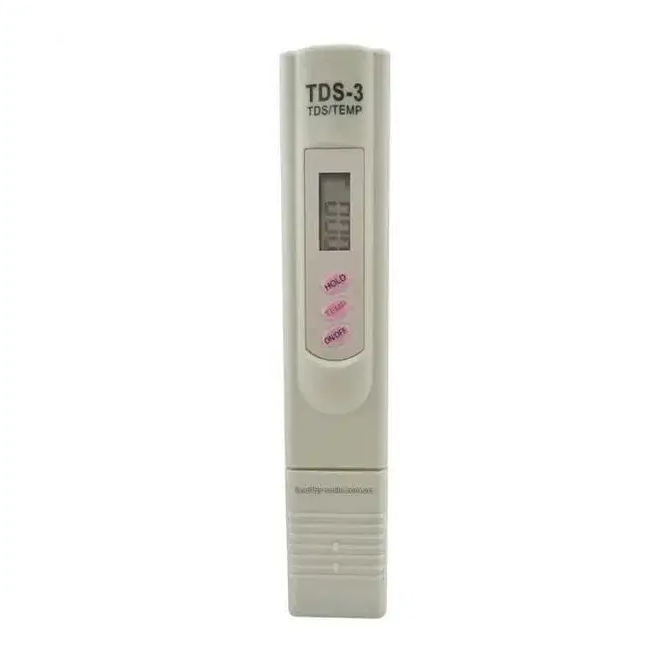
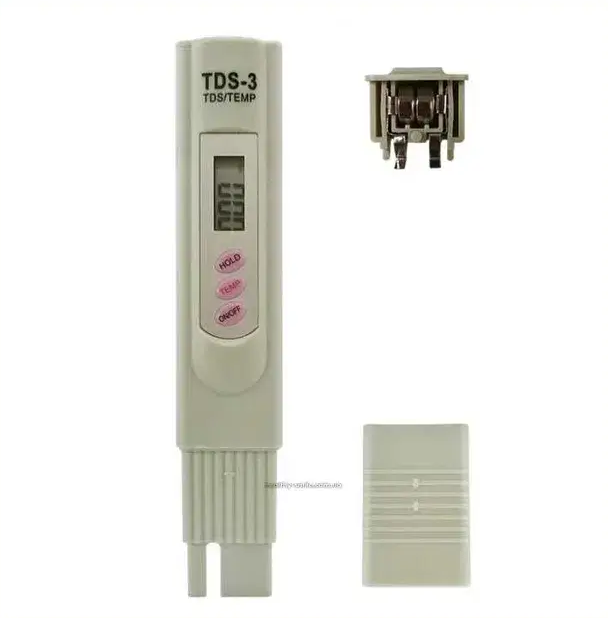

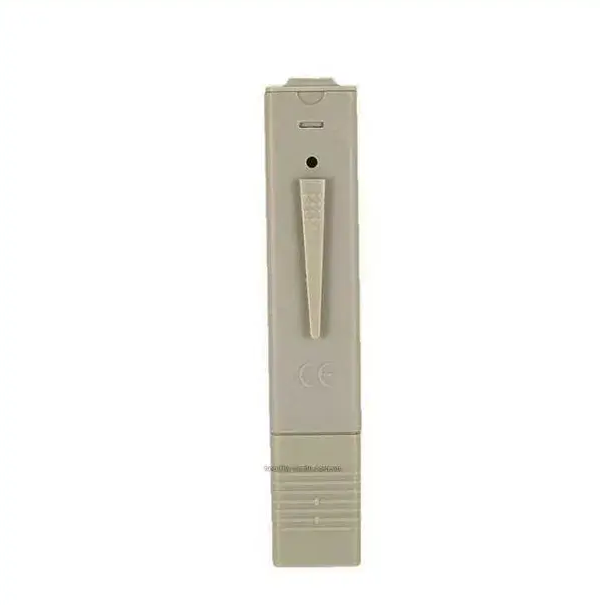
The Yellow Square TDS-3 is a portable digital TDS meter that measures total dissolved solids, electrical conductivity and water temperature. It covers 0–9999 ppm, shows results on a large display and has a HOLD button to freeze the reading. It runs on 2 LR44 batteries, weighs about 50 g and has a protective electrode cap. Use it for drinking water, filters, aquariums and hydroponics.
Specifications
| Parameter | Value |
|---|---|
| Model | TDS-3 |
| Type | Portable |
| Instrument | digital TDS/EC/temperature meter |
| Measures | TDS, electrical conductivity, water temperature |
| Measuring range | 0–9999 ppm |
| Display | large 3-digit |
| Controls | ON/OFF and HOLD buttons |
| Electrode protection | protective cap |
| Power | 2 × LR44 batteries |
| Housing | plastic |
| Weight | about 50 g |
What you get
- Three readings in one tool — TDS, conductivity and water temperature.
- Wide scale — 0–9999 ppm covers filtered water as well as heavily mineralised samples.
- Reading stays on screen — HOLD freezes the value after you lift the meter out.
- Pocket weight — about 50 g, powered by 2 LR44 batteries.
- Protected electrodes — a cap covers them between uses.
- Easy to read — large 3-digit display.
Who it is for
Owners of water filters and reverse osmosis units who want to know whether the system still works, households on well or borehole water, aquarium keepers, hydroponic growers, pool owners and labs needing quick dissolved-solids checks.
Who it is not for
It does not measure water hardness, pH or specific contaminants, only TDS, conductivity and temperature. For analysis of particular substances you need a lab test.
Uses
Checking drinking water from the tap, a well or a borehole; testing filters and reverse osmosis systems; hydroponics; aquariums; swimming pools; laboratory work.
In the box
TDS-3 meter with a protective electrode cap. Please check whether batteries are included before ordering.
Questions and answers
Does it measure water hardness?
Not directly. It reports total dissolved solids, conductivity and temperature, with no separate hardness reading.
How do I test a reverse osmosis filter?
Measure the water before and after the filter. The TDS difference shows how much the system is removing.
What does the HOLD button do?
It freezes the value on the display so you can read it after taking the meter out of the water.
What batteries does it use?
2 LR44 batteries.

Reviews
There are no reviews yet.