How to set up and calibrate a pH meter: a step-by-step guide with 4.01, 6.86 and 9.18 buffers
Calibrating a digital pH meter in 10 minutes: how to dissolve the buffer powders, in what order to immerse the electrode, when to press CAL, and how to check the result in the 9.18 solution.
A digital pH meter is calibrated at two points — first in a pH 6.86 buffer, then in pH 4.01 — and checked in a third one, pH 9.18: if the meter reads 9.16–9.20, the setup is correct. Each buffer powder is dissolved in 250 ml of distilled water at a temperature of about 25 °C, and between solutions the electrode is rinsed with distilled water and blotted with a tissue. Calibrate before first use and then roughly once every 2–4 weeks.
A pH meter shows two decimal places, but it only becomes accurate after calibration: the electrode “drifts” over time, and without adjustment the meter can be off by several tenths of a pH unit. The good news is that calibration takes about 10 minutes and does not require a laboratory. Below is a step-by-step guide that works for most pocket pH meters, including the Yellow Square portable pH meter (you can buy it here; calibration powders are already included).
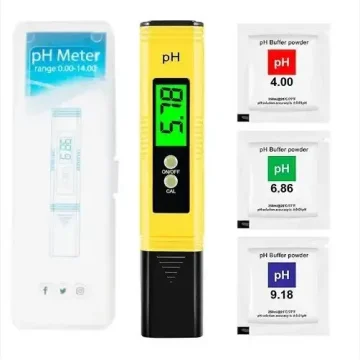
What you need for calibration
- A pH meter with a CAL button or a calibration screw.
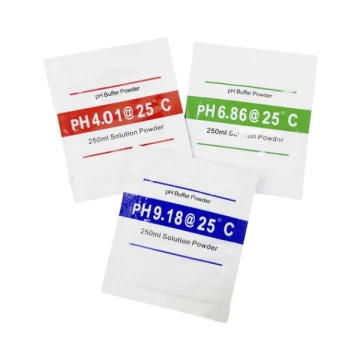
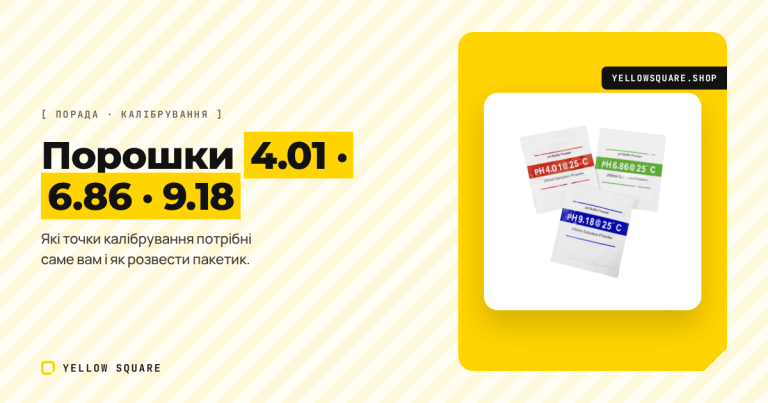
- Buffer powders pH 4.01, 6.86 and 9.18. All three points together — a calibration powder set for 33 ₴; each powder can also be bought separately for 11 ₴.
- Distilled or deionized water — 250 ml for each powder. Tap or bottled water will not work: the salts dissolved in it change the pH of the buffer.
- Three clean containers (glasses or jars) — a separate one for each solution, plus one with distilled water for rinsing.
- A lint-free tissue to blot the electrode.
- Preferably a thermometer: the buffer values are specified for 25 °C.
Step 1. Prepare the buffer solutions
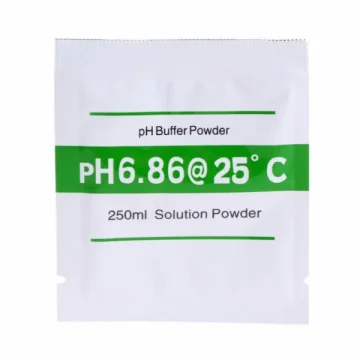
- Pour the contents of the pH 6.86 sachet into a clean container and add 250 ml of room-temperature distilled water (about 25 °C).
- Stir until the powder has dissolved completely — undissolved grains will give an incorrect point.
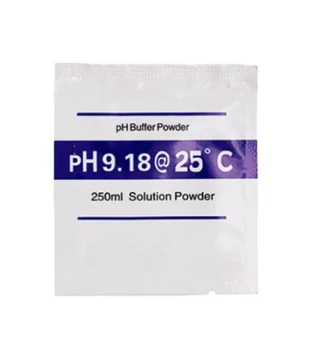
- Prepare the pH 4.01 and pH 9.18 solutions the same way in separate containers and label them so you don’t mix them up.
Step 2. Prepare the electrode
Remove the protective cap, dip the electrode into distilled water, rinse it, and gently blot it with a tissue — do not rub the glass bulb. Turn the meter on. While the electrode is in the air or in water, the numbers on the screen “jump” — this is normal: distilled water has no buffering capacity, so it will not give a stable reading.
Step 3. First point — pH 6.86
- Dip the electrode into the pH 6.86 solution so that the sensitive part is fully immersed.
- Press and hold the CAL button for about 3 seconds — the value 6.86 will appear on the screen and start blinking.
- Do not take the electrode out until the reading stops blinking and settles on the value. The meter has saved the first point.
Step 4. Second point — pH 4.01
- Take the electrode out, rinse it in distilled water, and blot it with a tissue — this keeps residue of the first buffer out of the second one.
- Dip the electrode into the pH 4.01 solution and press CAL again.
- Wait until the value stops blinking. The second point is saved.
Step 5. Check — pH 9.18
Rinse and blot the electrode once more and dip it into the pH 9.18 solution. This time, do not press the CAL button: this solution is used as a check. If the meter reads between 9.16 and 9.20, the pH meter is calibrated correctly. If the value falls outside this range, repeat steps 3–4 with fresh solutions; if your meter supports three-point calibration, also press CAL in 9.18.
| Buffer | Part of the scale | What it is for |
|---|---|---|
| pH 6.86 | near neutral | first, base calibration point |
| pH 4.01 | acidic | second point: hydroponics, soil, juices, soft water |
| pH 9.18 | alkaline | check or third point: pool, hard water |
If there is a screw instead of a CAL button
The simplest pH meters have no calibration button; instead, there is a small screw (potentiometer) on the side or on the back. Such meters are calibrated at one point: immerse the electrode in the pH 6.86 solution and turn the screw with a small screwdriver until 6.86 appears on the screen. Then rinse the electrode and check the meter in the 4.01 solution — the reading should be close to 4.01.
Video: pH meter calibration in action
The whole process — from dissolving the buffers to the check in the 9.18 solution — is shown in a video from the “Гроушоп Growmir” channel. The order of steps in it is the same as in the guide above.
Common mistakes that make a pH meter give false readings
- The powder was dissolved in tap water. Salts and chlorine shift the pH of the buffer — the meter gets “calibrated” to the wrong value.
- The electrode was not rinsed between solutions. Drops of the acidic buffer get into the neutral one and vice versa.
- The button was pressed too early. Save the value only once it has stopped blinking or changing.
- Cold or hot solutions. Buffers have their nominal value at 25 °C; the further the temperature is from that, the larger the error.
- A dried-out electrode. After use, close the electrode with its cap; for storage, a special electrode storage solution (3M KCl) works best, and a few drops of pH 4.01 buffer can be used as a substitute. Do not store the electrode in distilled water.
How often to calibrate a pH meter
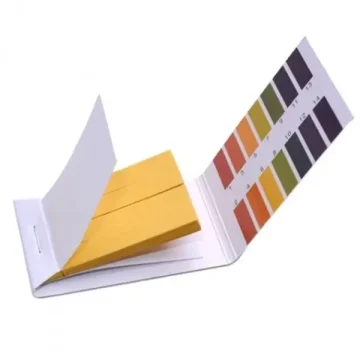
Before the first measurement — always, even if the meter is new. After that — once every 2–4 weeks with regular use, and also after measuring aggressive liquids, after the meter has been dropped, after replacing the batteries, or if the readings suddenly look “strange”. For a quick check between calibrations, it is handy to keep pH indicator strips — they will show whether the meter is badly off. Which powders to choose and how many you need is covered in the article “Calibration powders for a pH meter”.
Questions and answers
Can calibration powder be dissolved in ordinary water?
No. You need distilled or deionized water: the salts and chlorine in tap or bottled water change the pH of the buffer, and the meter will be calibrated incorrectly.
Why doesn’t a pH meter read exactly 7 in distilled water?
Distilled water absorbs carbon dioxide from the air and becomes slightly acidic (about pH 5.5–6.5), and it also has no buffering capacity, so readings in it “drift”. To check the meter, use buffer solutions, not water.
What is the difference between 4.00 and 4.01 buffers?
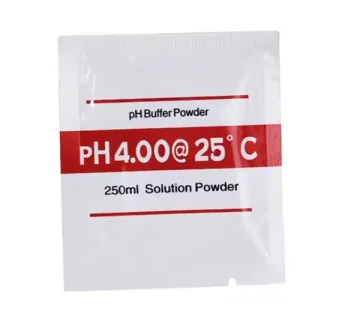
These are two common standards for the acidic buffer. For household pH meters, the 0.01 pH difference has no practical significance: a meter that is calibrated at 4.00 works just as correctly with a 4.01 solution.
Does a new pH meter need to be calibrated?
Yes. The electrode drifts during storage and shipping, so the meter is calibrated before the first measurement. The pH 4.00, 6.86 and 9.18 powders for this are already included with the Yellow Square pH meter.
What should I do if the meter reads, for example, 9.35 in the 9.18 solution?
Prepare fresh solutions and repeat the calibration at 6.86 and 4.01, rinsing the electrode thoroughly between them. If the error does not go away, the electrode may have aged or dried out.
Where to buy a pH meter and calibration powders
Everything you need for calibration is in stock at the Yellow Square warehouse in Kyiv, with shipping across Ukraine: a pH meter with powders included, a set of three powders, and each powder separately.